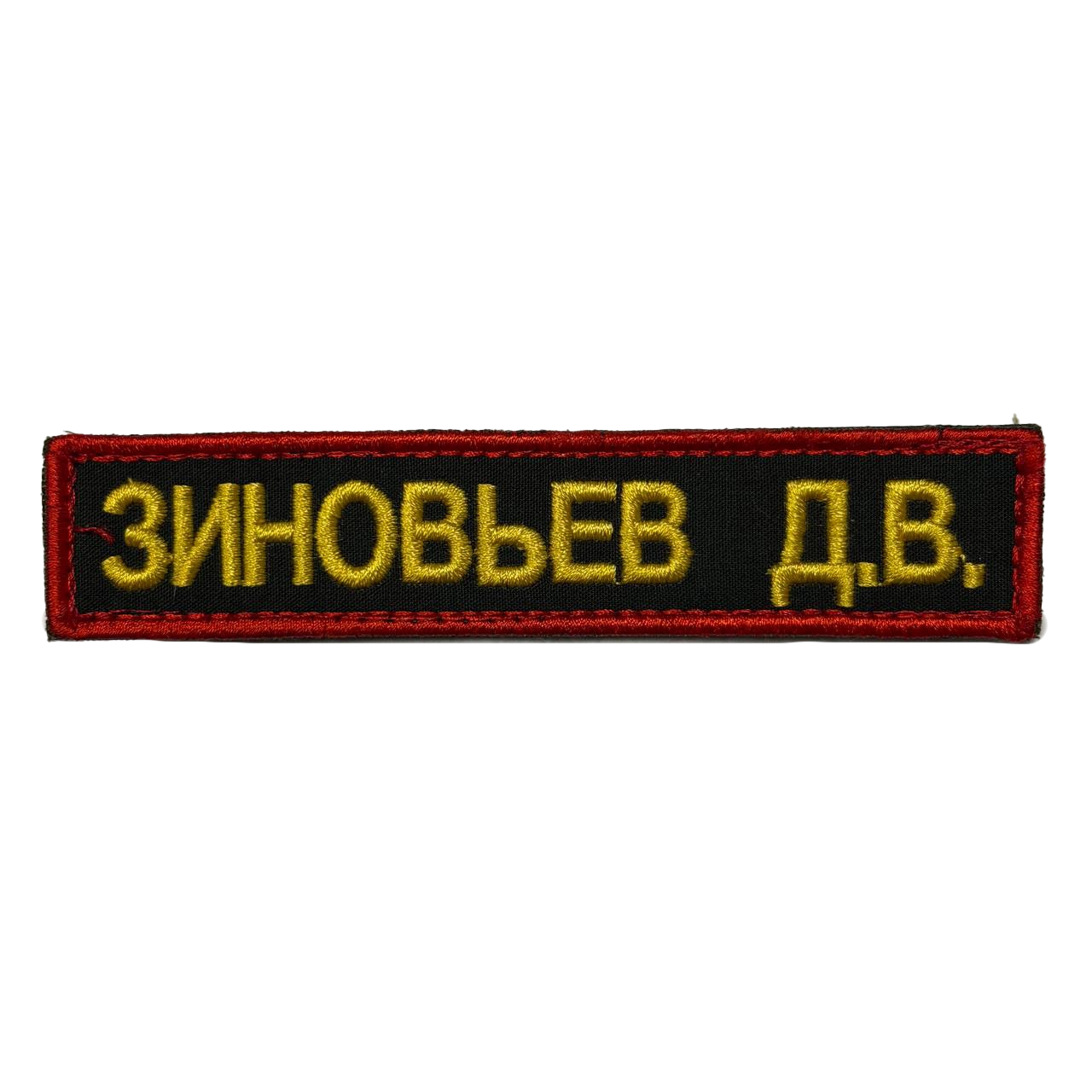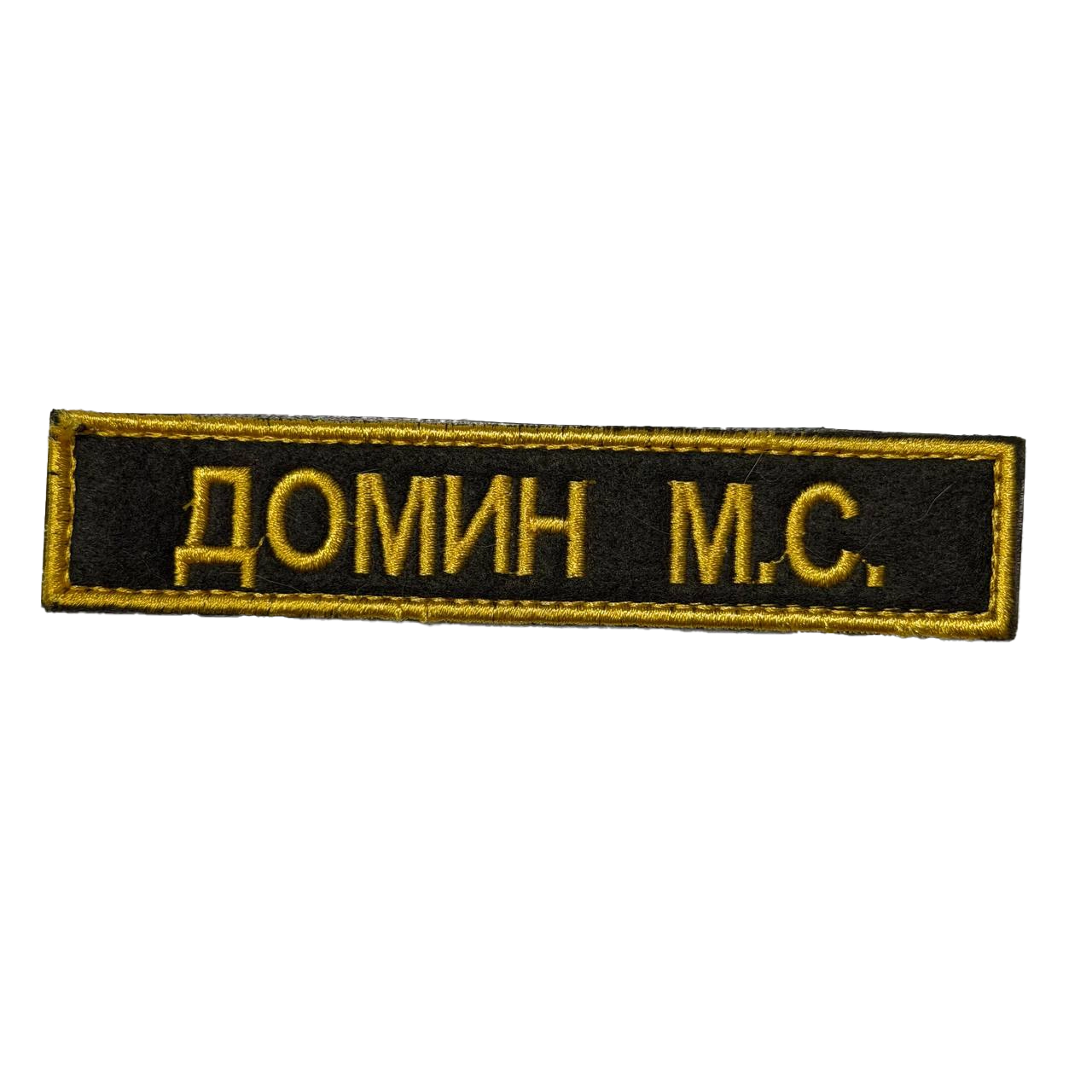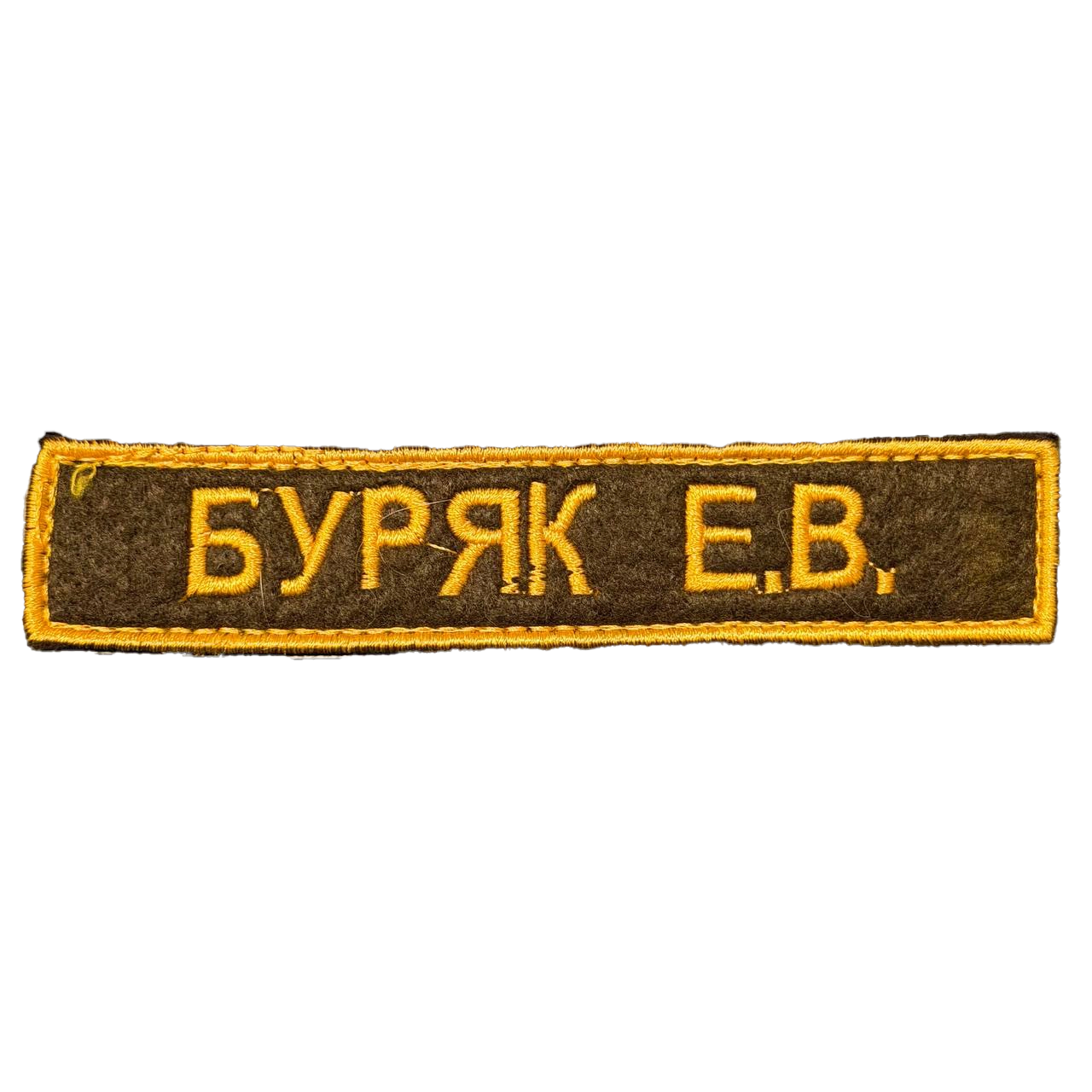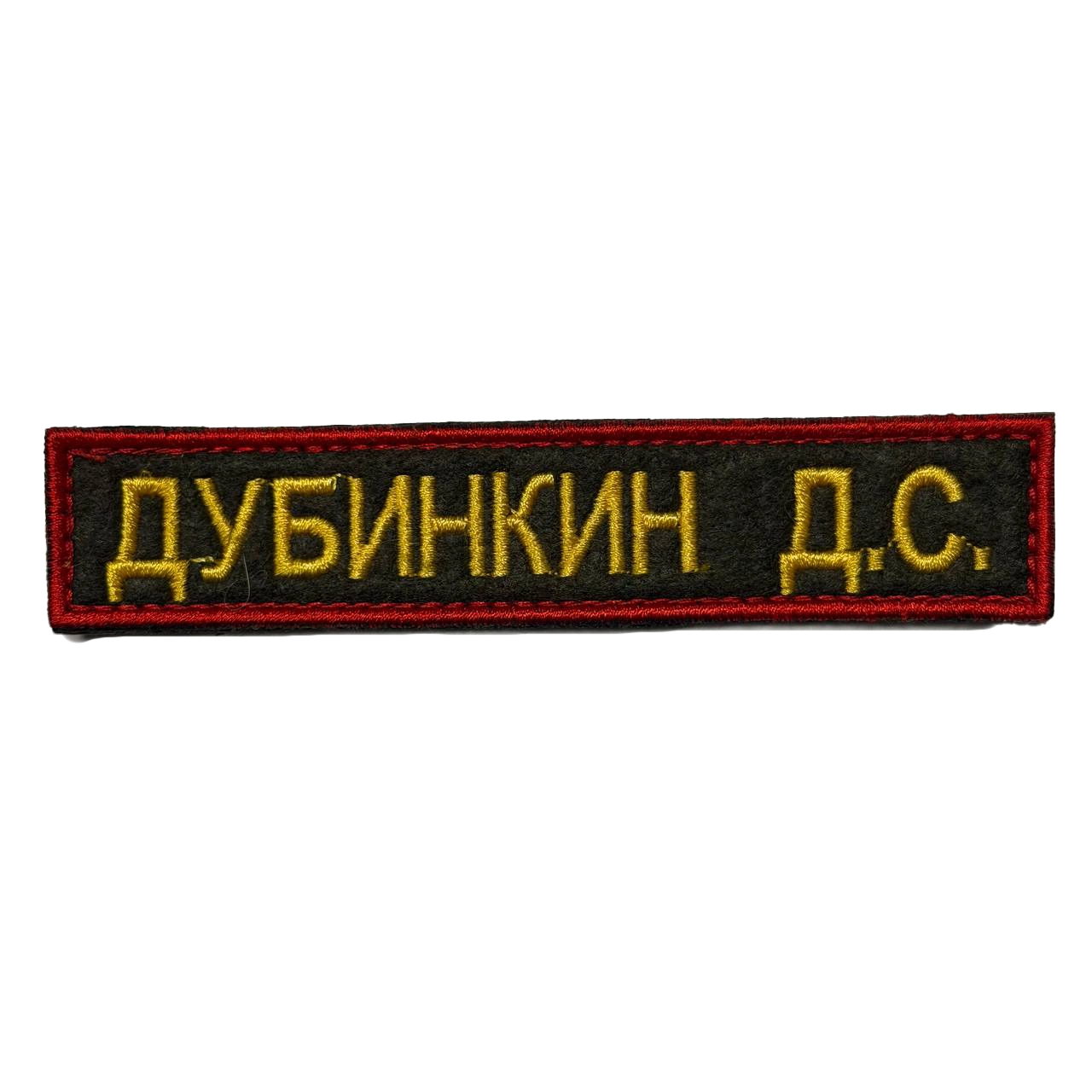
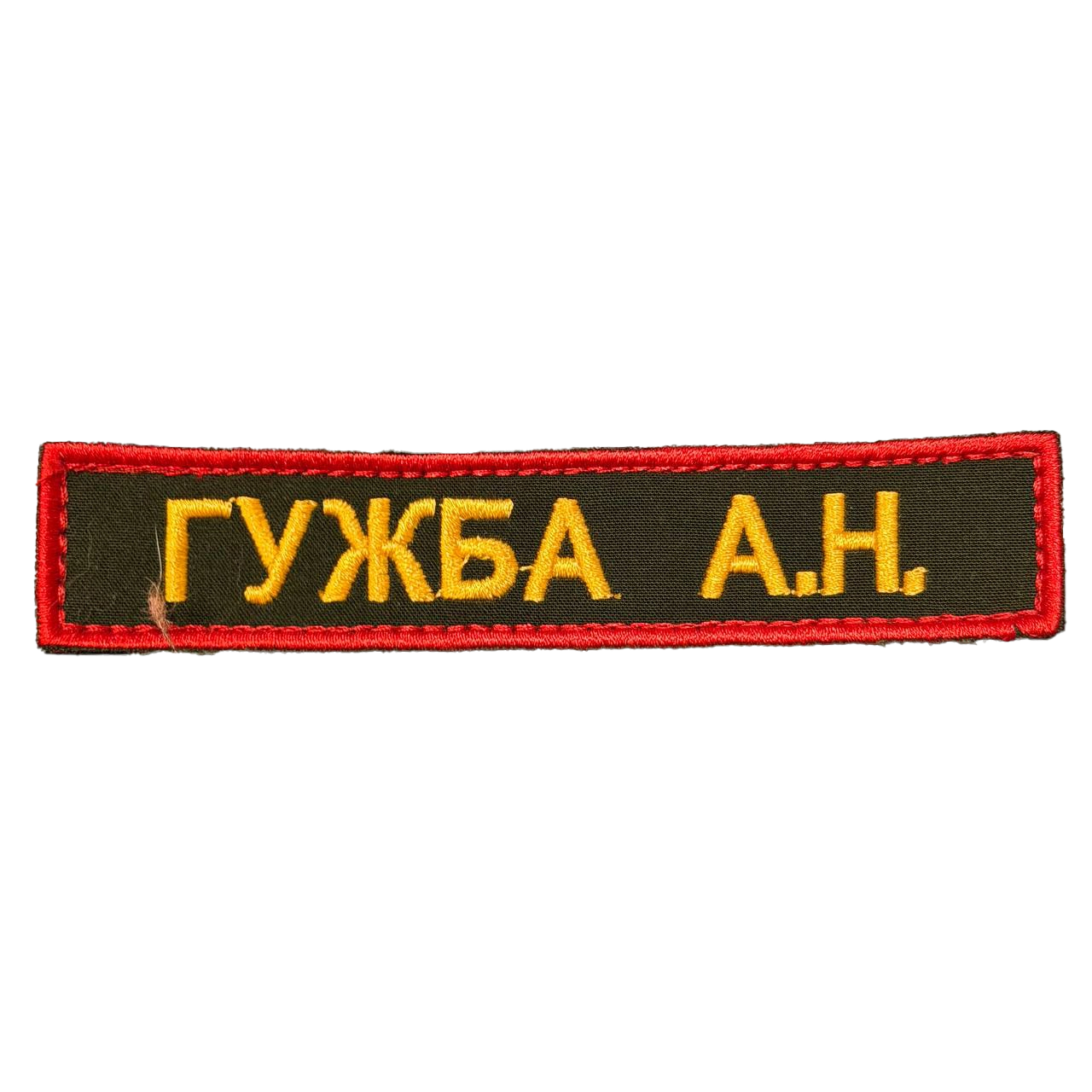
The Guzhba Name Tape carries the Cyrillic inscription “ГУЖБА А.Н.,” rendered in English as Guzhba A. N. The surname comes first, followed by two personal initials and their punctuation. The entire inscription occupies one horizontal line. This example has yellow lettering on a dark olive field, enclosed by a red rectangular border.
The surname Гужба is rendered as Guzhba. Its Ж is represented by the two-letter sequence zh in English, so the Latin spelling is longer than the Cyrillic one. The final а is part of the surname. The initials А.Н. become A. N., with Cyrillic Н transcribed as n rather than Latin h.
In Russian personal naming, a surname followed by two initials normally abbreviates the given name and patronymic. A patronymic is the additional personal name derived from a parent’s given name. The two abbreviated letters consequently have different functions from a military rank, service abbreviation or unit number. This Guzhba Cyrillic identification preserves the initials in the order actually shown, with no expanded first name added to the catalogue entry.
Yellow lettering is enclosed by a red rectangular perimeter on a dark olive field. The initials stand to the right of the surname and are separated from it by a broad gap.
Russian uniform nomenclature includes separate chest labels for the organization and for the wearer’s surname with initials. The personal-name format is the relevant comparison for this yellow letter name strip. An organization label would instead spell out a service or institution, while a blood-group tab would use a group letter and Rh notation. Here, the identifying content is the written name itself, so the surname and abbreviated personal names remain together in the product title and transcription.
The Russian Guzhba uniform tab can be read through both its original Cyrillic wording and its Latin transcription. Transliteration changes the alphabet used to write the name; it does not translate the surname into an English word. Keeping both forms is useful when comparing Russian labels with English-language inventories, especially where Cyrillic capitals resemble Latin letters but represent different sounds. The photographed combination of spelling, initials, field and border is retained as the identifying description of this individual example.